Published
Updated · Jizu(Ningbo)TradingCoLtd
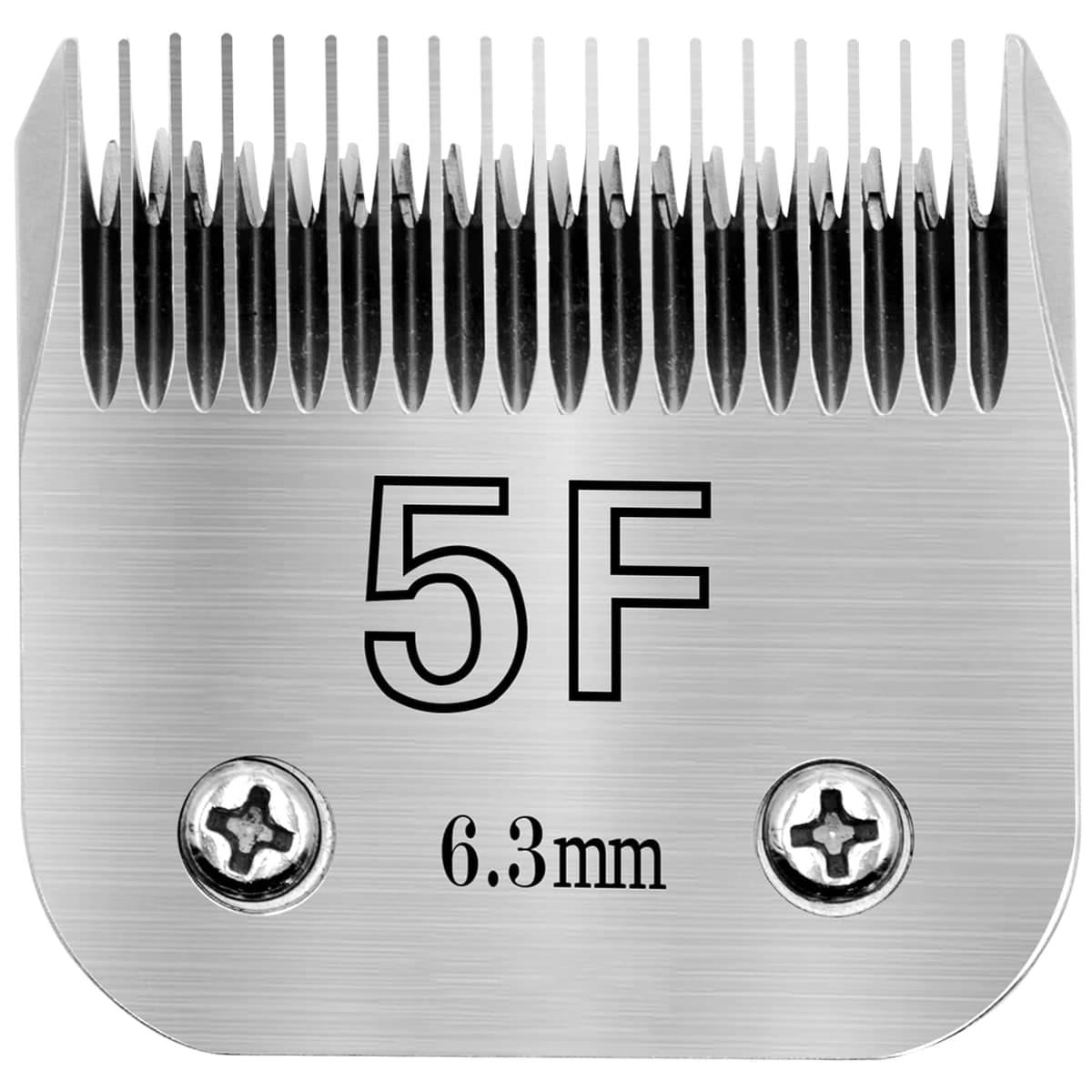
Read millimeters before the blade number
In this published range, the higher standard blade numbers have shorter listed cuts. #40 is 0.25 mm (1/100 in), while #10 is 1.5 mm (1/16 in).
The number is a catalogue designation, not the cut length in millimeters. The table also includes Finish Cut sizes #7F at 3.2 mm (1/8 in), #5F at 6.3 mm (1/4 in), #4F at 9.5 mm (3/8 in) and #3F at 13 mm (1/2 in). The inch values are the published nominal equivalents; keep both units on international order documents.
Match the application without making breed promises
The supplied use references distinguish close cutting from longer finish work. #15 lists face and feet; #10 lists abdomen and sanitary work; #7F and #5F include full-body references.
Treat coat and breed examples as discussion inputs. A named breed can have different coat condition, skin needs and intended styles. The #3F sheet does not yet confirm breed or coat recommendations. Close cutting and sensitive-area work require qualified professional judgement; veterinary preparation requires veterinary direction. This guide is a sourcing reference, not an animal-clipping procedure.
Keep cut length, teeth and material separate
Size, tooth designation and cutter material are separate specification fields. F and FC mean Finish Cut; confirmed equivalents include #7F/7FC, #5F/5FC and #4F/4FC.
A #5F designation does not tell a buyer whether the moving cutter is carbon steel or ceramic. All listed sizes use a steel fixed blade, with the moving cutter specified separately. For the standard-tooth sizes, do not add an F label or a skip-tooth claim that is absent from the product reference. Review the real product photograph, but use a written specification to confirm the supplied configuration.
- Record size, nominal mm/in length, tooth designation and moving-cutter material in distinct columns.
- Check the exact clipper model against the compatibility reference before approving a sample.
Build a sample and order-line checklist
Approve the actual requested configuration before a bulk order. For example, compare #7F at 3.2 mm (1/8 in) with #5F at 6.3 mm (1/4 in) as two different lengths.
Decide with the supplier how the sample's fit and finish will be evaluated. Record the clipper model, preparation and handling conditions so repeat observations are meaningful. Nominal cut lengths do not guarantee an exact finished coat in every situation. State quantities per size, artwork requirements and the intended acceptance criteria in the RFQ; the stated MOQ is 100 pieces, with the size split to be confirmed.
- Retain the approved sample reference and the agreed size label with each order line.
- Confirm lead time for the actual size mix rather than assuming every configuration follows the standard 1–2 weeks.
Sources: Jizu A5 catalogue, product media and factory photographs. These procurement checklists define what to verify; they do not report laboratory results or completed batch inspections.
Explore the A5 specifications
Use these eight published A5 specifications to build separate RFQ order lines. Listed lengths are nominal references in millimeters and inches.
- #40 blade · 0.25 mm (1/100 in)
Pre-operative shaving, Foot pads
- #30 blade · 0.5 mm (1/50 in)
Close trimming, Ears
- #15 blade · 1.2 mm (3/64 in)
Face, Feet
- #10 blade · 1.5 mm (1/16 in)
Abdomen, Sanitary areas
- #7F blade · 3.2 mm (1/8 in)
Full-body grooming
- #5F blade · 6.3 mm (1/4 in)
Full body
- #4F blade · 9.5 mm (3/8 in)
Long-haired dogs
- #3F blade · 13 mm (1/2 in)
Longest finish cut
Turn the checklist into an RFQ
Send sizes, quantities, exact clipper models, cutter materials and your sample or inspection requirements for a programme-specific quotation.
Prepare an A5 blade RFQ